Hybrid heating systems are meant to be the best of both worlds. The heat pump handles the lighter load during mild weather, and when temperatures drop, the gas furnace steps in to provide reliable heating. When everything is set up correctly, you never think about which system is running. The transitions feel seamless, and your energy bills benefit from that efficiency.
But when the two systems stop communicating properly, you feel it fast. Rooms warm unevenly. The furnace turns on at strange times. The heat pump seems to run harder than it should. You may even hear it cycling on and off in short bursts. These aren’t random events these are signs that the hybrid system’s logic has fallen out of sync.
In the field, technicians often say hybrid systems don’t fail dramatically; they fail subtly. A sensor drifts a few degrees. A thermostat mode gets left unchanged during a replacement. A coil starts losing efficiency. All these small issues work against the system’s balance until the heat pump and furnace are essentially speaking different languages.
Below, we’ll walk through the causes of these sync failures in a natural, real-world way, based on how they actually show up in homes.
Why Hybrid Systems Depend on Precision
Unlike a standard heating setup, a hybrid system relies on multiple decision-makers:
- The thermostat chooses which heat source should run.
- The outdoor sensor reports real-time temperature.
- The heat pump’s performance tells the system whether it can keep up.
- The furnace’s control board determines whether it’s safe to ignite.
If any one of these sends inaccurate data or reacts differently than expected, the whole timing sequence collapses. That’s why homeowners often describe the system as “acting confused.”
A hybrid system does not have the luxury of guessing. It needs accurate, up-to-date information from every component to make the right call between electricity and gas.
Thermostat Misconfiguration: The Most Common Sync Failure
Most hybrid heating issues begin with the thermostat, especially when it’s misconfigured or not communicating properly with the system. If your thermostat shows abnormal behavior, it may be experiencing deeper issues similar to those discussed in our thermostat not working troubleshooting guide.
Problems often begin when homeowners install a new smart thermostat themselves or switch brands without checking dual-fuel compatibility. Even thermostats that claim to support hybrid systems need the right settings dialed in. The most common thermostat issues include:
- A dual-fuel mode that was never activated
- Incorrect lockout temperatures
- Balance points left at factory defaults
- Auxiliary heat kicking in at the wrong time
A small configuration error can completely change how the system behaves. For example, if the lockout temperature is too high, your furnace will take over far sooner than necessary. If it’s too low, your heat pump may attempt to run in conditions where it simply cannot keep up.
Either way, the system feels unpredictable because the thermostat is basing decisions on flawed logic, not mechanical failures.
Outdoor Temperature Sensors That Feed Bad Information
The outdoor sensor plays a bigger role than most homeowners realize. It tells the thermostat when the heat pump is still efficient and when the furnace should take over. If that sensor is giving inaccurate readings by even a few degrees, the hybrid system will switch at all the wrong times. Common causes include:
- Sensors mounted in direct sunlight
- Sensors placed near a furnace exhaust vent
- Wiring damaged by weather exposure
- Sensors drifting over time
A faulty sensor can make a perfectly functioning heat pump shut down early, or force a furnace to run during mild weather when it isn’t needed. Homeowners often blame the equipment, but the issue is usually the accuracy of this little sensor. When outdoor temperature data is inaccurate, the system may switch heat sources at the wrong time. This problem is often tied to sensor placement or failure, which we explain in detail in our guide on heat pump outdoor sensor causing heat loss.
When Heat Pump Performance Drops and Throws Off the System
Sometimes the sync failure begins because the heat pump simply can’t deliver the heating capacity it once did. When the thermostat senses that the heat pump is struggling to reach the set temperature, it assumes it’s too cold outside and triggers auxiliary heat or switches to the furnace. But the real problem may be:
- Low refrigerant
- A dirty outdoor coil
- A weak compressor
- A malfunctioning reversing valve
In this case, the thermostat is actually doing its job. It sees reduced heating output and pulls in backup heat. The result is a system that constantly hands off heating duties, burns more fuel than expected, and loses efficiency. Reduced heating capacity is especially noticeable in colder conditions, which aligns with common problems outlined in why heat pumps struggle in cold weather.
Furnace Lockouts That Confuse the Entire Hybrid Sequence
Gas furnaces have strict safety protocols. When something goes wrong with ignition, flame sensing, ventilation, or airflow, the furnace enters a lockout. In a standalone system, this is simple. In a hybrid system, the thermostat may not understand why the furnace isn’t responding.
A furnace lockout can cause:
- The heat pump to run when it shouldn’t
- The thermostat to repeatedly call for furnace heat
- Rapid cycling between systems
- Insufficient heat on very cold days
Homeowners often misdiagnose this as a heat pump problem because the furnace is silent. But the furnace’s safety controls may be preventing ignition long before the system realizes the heat pump has been left carrying the entire load. Incorrect settings can also cause situations where the system calls for heat but nothing responds, a common issue explained in why a thermostat won’t turn on heat.
Wiring and Control Boards That Just Don’t Agree
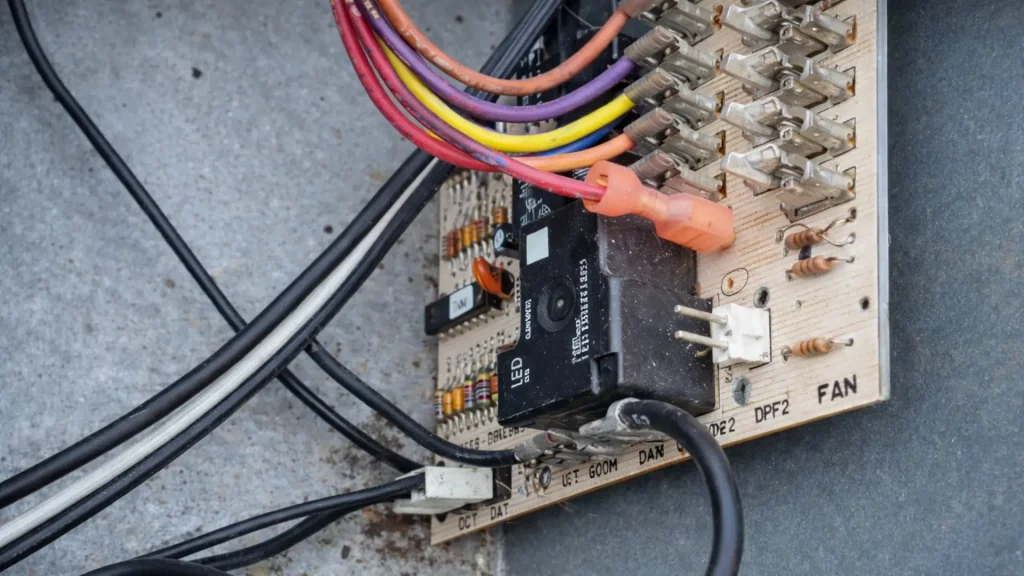
Hybrid systems are sensitive to wiring mistakes and board-to-board communication issues. When systems are installed by different contractors over the years, or when a homeowner upgrades one piece of equipment but not another, miscommunication becomes likely.
Some older furnace control boards don’t understand the staging logic of newer heat pumps. Some thermostats need specific wiring to control dual-fuel lockouts but are never fully connected. Homeowners may also notice cool air blowing during defrost cycles, a behavior often misunderstood and covered in our article on heat pump defrost cycle problems.
The symptoms often include:
- Heat pump and furnace fighting for priority
- Lack of proper shutdown when switching modes
- Defrost cycles that blow cold air indoors
- The furnace running unnecessarily
These problems often require an experienced technician who understands hybrid logic, not just equipment installation.
How Homeowners Can Spot a Sync Failure Early
Hybrid system problems rarely appear suddenly. The warning signs usually show up slowly in day-to-day comfort:
- The furnace begins running more often than in past winters.
- The heat pump activates on unusually cold mornings.
- You feel cool air during a defrost cycle.
- Energy bills rise even though temperatures haven’t changed much.
Any change in behavior compared to previous seasons is a sign the balance between the heat pump and furnace has shifted. Because hybrid systems depend on precision, even a small drift in performance is worth investigating.
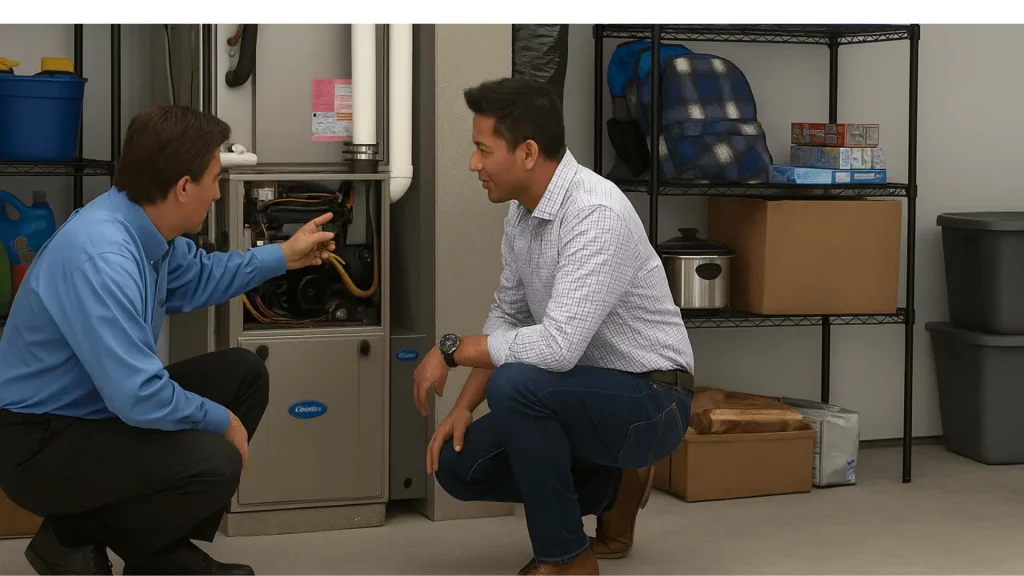
When It’s Time to Bring in a Professional
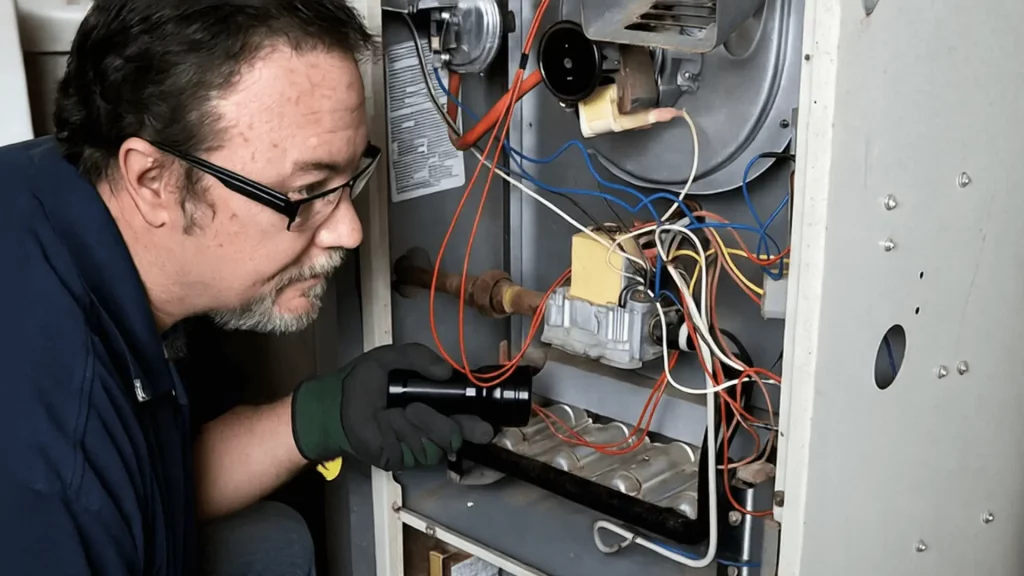
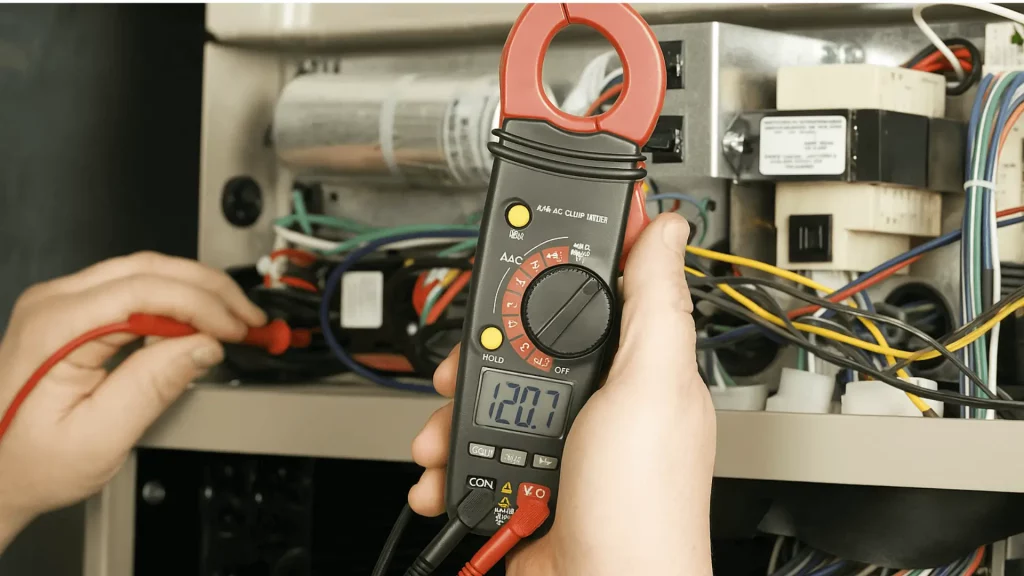
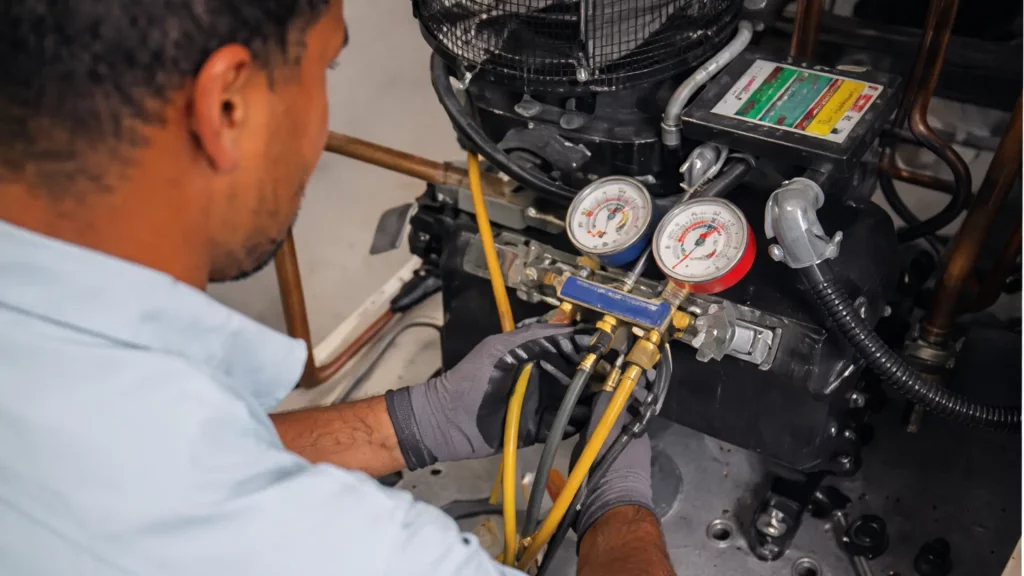
Homeowners can check thermostat settings, filters, and visible sensor placement. But diagnosing deeper hybrid sync failures requires testing refrigerant levels, verifying furnace ignition data, reading sensor resistance values, and reviewing control board logic.
A qualified technician will:
- Confirm accurate outdoor sensor readings
- Verify proper dual-fuel configuration
- Check refrigerant charge and heat pump capacity
- Inspect furnace lockout history
- Evaluate board-to-board communication
Regular inspections and preventive care reduce the risk of communication failures between system components. A detailed checklist is available in our furnace maintenance checklist. Hybrid systems reward regular tuning. When maintained properly, they offer some of the best heating efficiency available. When ignored, they easily slip out of balance.
Frequently Asked Questions
1. What does a hybrid heating sync failure actually mean?
A sync failure means the heat pump and gas furnace are not switching modes at the right time. This usually happens when the thermostat receives bad data from sensors, the heat pump underperforms, or the furnace experiences a safety lockout. The system becomes confused about which heat source should run, leading to uneven or inefficient heating.
2. Why does my heat pump run when it’s too cold for it to work efficiently?
This often happens when the outdoor sensor is inaccurate or the thermostat’s lockout temperature is set incorrectly. It can also occur when the thermostat doesn’t recognize that the heat pump’s output has dropped due to refrigerant loss or a failing component.
3. Can a faulty thermostat cause my furnace and heat pump to run at the wrong times?
Yes. In hybrid systems, the thermostat makes all switching decisions. If it’s misconfigured, incompatible with dual-fuel logic, or receiving incorrect sensor data, it will trigger both systems at the wrong times.
4. Why does my furnace keep locking out in a hybrid system?
Common causes include ignition failures, flame sensing problems, ventilation restrictions, or overheating due to airflow issues. When the furnace locks out, the thermostat may default back to the heat pump, which creates the appearance of a sync or communication issue.
5. How can I tell if my hybrid system needs professional diagnosis?
If your system switches heat sources too often, blows cool air during heating, runs auxiliary heat on mild days, or shows a noticeable change in behavior from previous winters, it’s time for a professional inspection. These are early indicators that the system’s communication or performance has drifted out of balance.