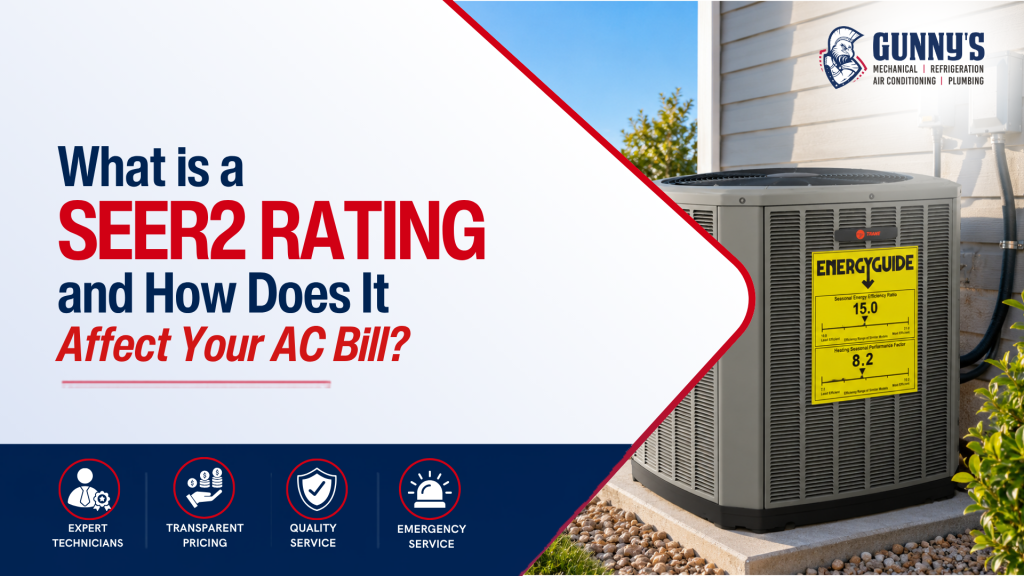
Choosing an HVAC system today involves more than comparing brands or prices. Efficiency ratings play a direct role in long-term operating cost, comfort, and system reliability. Among these, SEER2, EER2, and HSPF2 are the most important, yet they are often misunderstood or used interchangeably.
A clear understanding of these metrics helps you avoid overspending and ensures the system you choose actually performs well in your environment.
Why the “2” Ratings Matter
SEER2, EER2, and HSPF2 are updated versions of older efficiency standards. The revised testing methodology accounts for higher external static pressure, which better reflects real-world conditions such as duct resistance and airflow limitations.
As a result, these ratings provide a more accurate estimate of how a system will perform after installation, not just under controlled lab conditions. When comparing equipment today, these updated metrics should always be the reference point.
SEER2: Seasonal Cooling Efficiency
SEER2 (Seasonal Energy Efficiency Ratio 2) measures how efficiently an air conditioning system or heat pump operates over an entire cooling season.
It is calculated by dividing total cooling output by total energy consumption across a range of outdoor temperatures.
What SEER2 tells you:
- Expected energy efficiency over time
- Long-term operating cost for cooling
- Performance across typical seasonal conditions
A higher SEER2 rating generally indicates better energy efficiency and lower electricity consumption throughout the cooling season.
Practical implication:
SEER2 is most relevant for homeowners looking to reduce annual energy bills. However, because it represents an average, it does not fully capture system behavior during extreme heat conditions.
EER2: Peak Condition Performance
EER2 (Energy Efficiency Ratio 2) measures system efficiency at a fixed high outdoor temperature, typically around 95°F (35°C), along with specified indoor conditions.
Unlike SEER2, EER2 does not average performance. It reflects how the system performs under maximum load.
What EER2 tells you:
- Cooling efficiency during peak heat
- System stability under stress
- Ability to maintain indoor comfort in extreme conditions
Practical implication:
EER2 is particularly important in regions where high temperatures are sustained for long periods. A system with a strong SEER2 but weak EER2 may appear efficient overall but struggle to maintain comfort during the hottest hours of the day.
HSPF2: Seasonal Heating Efficiency
HSPF2 (Heating Seasonal Performance Factor 2) applies to heat pumps and measures heating efficiency over an entire heating season.
It is calculated by dividing total heating output by total electricity consumption during that period.
What HSPF2 tells you:
- Heating efficiency over time
- Estimated winter energy usage
- Cost-effectiveness of heat pump operation
Practical implication:
For properties that rely on heat pumps for primary heating, HSPF2 is a critical metric. Higher values indicate better efficiency and lower heating costs over the season.
Key Differences at a Glance
| Metric | Function | Measurement Basis | Best Use Case |
|---|---|---|---|
| SEER2 | Cooling (seasonal) | Variable temperatures | Estimating annual cooling cost |
| EER2 | Cooling (peak condition) | Fixed high temperature | Evaluating extreme heat performance |
| HSPF2 | Heating (seasonal) | Seasonal heating cycle | Assessing heat pump efficiency |
Each metric answers a different performance question. None of them should be evaluated in isolation.
How to Choose the Right Rating
The ideal combination depends on climate, usage patterns, and system type.
- Hot and High-Demand Environments: In regions with prolonged high temperatures, prioritize a balanced combination of SEER2 and EER2. While SEER2 affects long-term efficiency, EER2 ensures the system can maintain performance under peak load.
- Moderate Climates: Where temperature fluctuations are moderate, SEER2 becomes the primary indicator of efficiency. Extremely high EER2 ratings may not provide proportional value unless peak heat conditions are frequent.
- Heat Pump Applications: If the system is expected to provide both heating and cooling, HSPF2 should be evaluated alongside SEER2. Heating efficiency can significantly influence total annual energy costs.
Common Decision Errors
- Over-reliance on a single metric: Selecting equipment based solely on SEER2 can result in poor peak performance if EER2 is inadequate.
- Ignoring climate-specific needs: Efficiency ratings must align with environmental conditions. A high-efficiency system designed for moderate climates may underperform in extreme heat.
- Assuming higher ratings always justify cost: Incremental gains in efficiency often come with diminishing financial returns. Lifecycle cost analysis is essential.
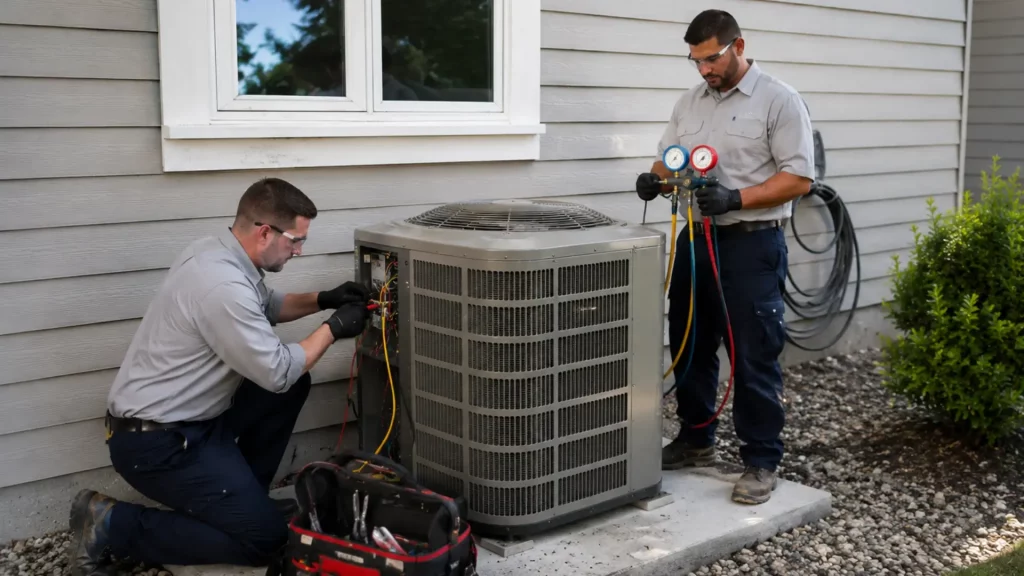
- Neglecting installation quality: System sizing, duct design, and installation standards have a direct impact on actual performance. Even high-rated equipment cannot compensate for poor installation.
Beyond Ratings: What Truly Impacts Performance
While efficiency metrics are important, they represent only one part of system performance. Real-world outcomes depend heavily on:
- Accurate load calculation and system sizing
- Proper ductwork design and airflow balance
- Quality of installation
- Routine maintenance and servicing
A well-installed mid-efficiency system can outperform a poorly installed high-efficiency unit.
Final Thoughts
SEER2, EER2, and HSPF2 are complementary metrics, not competing ones. Each provides insight into a different aspect of HVAC performance.
A well-informed decision requires evaluating all three in the context of your specific climate, usage pattern, and system requirements. The goal is not to choose the highest rating available, but to select a system that delivers consistent performance, reasonable operating cost, and long-term reliability.
Need Expert Guidance?
If you are planning to upgrade your AC or heat pump and want a system that is correctly sized, efficiently installed, and suited to your climate, the team at Gunny’s Air Conditioning & Plumbing can help.
Their technicians evaluate real usage conditions, not just specifications, so you get a system that performs as expected after installation, not just on paper. Schedule a consultation to compare options, understand actual cost savings, and choose the right efficiency balance for your home.
Frequently Asked Questions About SEER2 vs EER2 vs HSPF2
1. What is the main difference between SEER2, EER2, and HSPF2?
SEER2, EER2, and HSPF2 measure different aspects of HVAC efficiency.
SEER2 evaluates overall cooling efficiency across an entire season, EER2 measures performance during peak high temperatures, and HSPF2 focuses on heating efficiency for heat pumps over the winter season. Each metric serves a different purpose and should be considered together when choosing a system.
2. Which rating is more important when buying a new AC?
It depends on your climate and usage.
For most homeowners, SEER2 is important for long-term energy savings. However, in areas with extreme heat, EER2 becomes equally important because it reflects how well the system performs during the hottest days. Ideally, both should be balanced.
3. Does a higher SEER2 rating always mean better performance?
Not necessarily.
A higher SEER2 rating indicates better seasonal efficiency, but it does not guarantee strong performance in extreme heat. If the EER2 rating is low, the system may struggle during peak temperatures. That’s why evaluating both ratings is important before making a decision.
4. Is HSPF2 important if I only use my AC for cooling?
No, HSPF2 is only relevant for heat pumps that provide heating.
If your system is used exclusively for cooling, you should focus on SEER2 and EER2. However, if you rely on a heat pump for both heating and cooling, HSPF2 becomes a critical factor in determining winter energy costs.
5. How do I choose the right efficiency rating for my home?
The right choice depends on your location, climate, and usage pattern.
Homes in hot climates should prioritize both SEER2 and EER2 for better performance and comfort, while moderate climates can focus more on SEER2. For heat pump users, HSPF2 should also be considered. Consulting a professional like Gunny’s Air Conditioning & Plumbing ensures the system is properly sized and selected based on real conditions, not just ratings.