Replacing a furnace is not a decision most homeowners make often. Usually, the decision comes after an older system starts needing frequent repairs; heating becomes inconsistent, or energy bills continue to rise.
When you start shopping for a new furnace, it is easy to focus on the equipment price alone. But the lowest-priced system is not automatically the best choice. The right new furnace needs to match your home’s heating requirements, existing ductwork, budget, and comfort expectations.
Before choosing a new furnace for home use, consider these seven factors.
1. Make Sure the Furnace is Properly Sized
One of the most important decisions when buying a new furnace is choosing the correct heating capacity.
Furnace size should not be determined by square footage alone. A proper load calculation considers factors such as home size, insulation, windows, ductwork, and local climate. Carrier specifically recommends professional load calculations rather than simply replacing an existing furnace with one of the same sizes.
An oversized furnace may cycle on and off more frequently, while an undersized system may struggle to maintain comfortable temperatures.
That means the question should not simply be:
“What size furnace did my old system have?”
Instead, ask:
“What size furnace does my home actually need?”
This is one of the most important questions to ask before purchasing a new furnace for house installation.
2. Compare Efficiency, Not Just the Purchase Price
When comparing a new furnace, look at its Annual Fuel Utilization Efficiency, or AFUE, rating.
AFUE indicates how efficiently a furnace converts fuel into usable heat. A higher rating generally means less fuel is wasted during operation.
However, higher efficiency also usually means a higher upfront price.
When comparing the new furnace cost, consider both:
- Initial equipment and installation price
- Expected operating costs
- How frequently the furnace will run
- Available rebates or incentives
- How long you expect to remain in the home
The most efficient system is not automatically the best financial choice for every homeowner. The better choice is the efficiency level that makes sense for your home, usage, and budget.
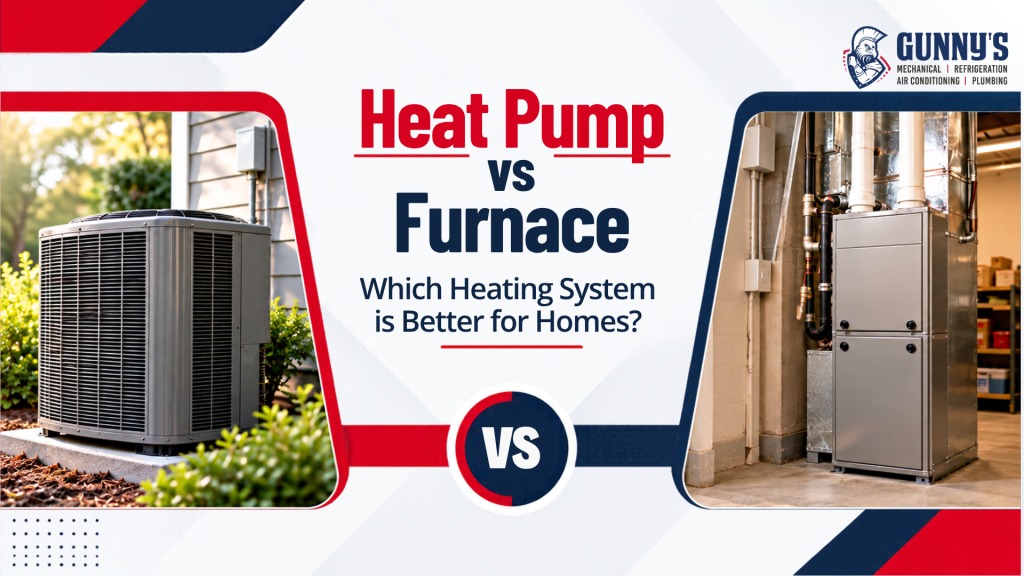
3. Understand Single-Stage, Two-Stage, and Modulating Options
Not every new furnace operates in the same way.
A single-stage furnace generally operates at one heating capacity. A two-stage furnace can operate at a lower output during milder heating conditions and increase output when more heat is needed. Modulating systems can make much smaller adjustments to heating output.
These differences can affect:
- Temperature consistency
- Operating efficiency
- Noise levels
- Comfort
- Upfront equipment cost
Ferguson’s furnace guide similarly explains how single-stage, two-stage, and modulating burners differ in their ability to adjust heating output.
If you are considering a two-stage system, your thermostat also matters. A compatible thermostat may be required to control the different heating stages correctly.
Gunny’s existing guide on 2 Stage Thermostat can help explain how two-stage thermostat operation works.
4. Look at the Blower and Comfort Features
The heating capacity is not the only part of a new furnace that affects comfort.
Furnaces can use different blower configurations, including multi-speed and variable-speed blowers. Variable-speed technology can adjust airflow more precisely as system conditions change and may provide more consistent comfort.
When comparing equipment, ask what blower technology is included and whether it is compatible with your existing air conditioning system.
Other features may include:
- Variable-speed operation
- Multi-stage heating
- Smart thermostat compatibility
- Improved airflow control
- Quieter operation
You do not necessarily need every premium feature. The goal is to choose the features that provide meaningful benefits for your home.
5. Understand the Full New Furnace Cost
One of the biggest mistakes homeowners make is comparing equipment prices without considering installation.
The new furnace cost can include much more than the furnace itself. Installation requirements may affect the final price, including:
- Labor
- Ductwork modifications
- Venting changes
- Electrical work
- Gas connections
- Permits
- Thermostat installation
- Removal of the existing equipment
Carrier’s current buying guide notes that installed furnace pricing varies according to factors such as fuel type, efficiency, home requirements, ductwork, venting, and premium features.
So, if you are researching how much do new furnace costs, be careful with online prices that only show the equipment.
The better question is:
“What is the total installed cost for my home?”
That gives you a much more realistic comparison.
6. Consider Your Existing HVAC Setup
A new furnace does not operate in isolation.
Your furnace works with other parts of your home’s HVAC system, including the ductwork, thermostat, air conditioner, and indoor airflow components.
Before replacing the furnace, ask whether your existing system is compatible with the new equipment.
This is particularly important if:
- Your ductwork needs repairs
- Your air conditioner is also aging
- Your thermostat is outdated
- Your electrical system needs modifications
- Your existing venting does not meet the requirements of the new equipment
A professional evaluation can identify these issues before installation begins.
If your existing furnace is already experiencing problems, you may also want to review Gunny’s Furnace Repair in Las Vegas guide before deciding whether replacement is necessary.
7. Choose the Installer Carefully
Even the right new furnace can perform poorly if it is installed incorrectly.
When comparing contractors, do not evaluate quotes based only on price. Ask what is included in the installation and whether the contractor will properly size the equipment for your home.
Look for a contractor who:
- Provides a detailed written estimate
- Explains the recommended furnace size
- Evaluates the existing ductwork
- Explains efficiency options
- Identifies required permits or modifications
- Explains warranty coverage
- Has appropriate licensing and insurance
- Provides clear information about installation
Carrier also recommends looking for qualified contractors who perform load calculations, provide written quotes, and explain warranty and installation details.
A slightly higher cost for new furnace installation can make sense if it includes better installation practices and a more appropriate system.
How Do You Know Which New Furnace is Right for Your Home?
There is no single new furnace that is right for every homeowner.
A practical way to compare your options is to look at four things:
Your home:
What heating capacity does it actually require?
Your comfort needs:
Do you want basic heating or more precise temperature control?
Your budget:
How much can you reasonably spend upfront?
Your long-term plans:
How long do you expect to stay at home, and how much does operating efficiency matter?
This approach is more useful than choosing a new furnace based solely on brand name or the lowest advertised price.
What is the Average Cost of a New Furnace?
The average cost of new furnace installation varies significantly depending on the equipment, efficiency, size, labor, and installation requirements.
As a general planning point, published furnace cost guides can show broad ranges, but an online average cannot account for the specific requirements of your home. Carrier’s current guide, for example, gives an installed gas furnace planning range of approximately $3,800 to $12,000.
Your actual brand new furnace cost may be higher or lower depending on the system selected and the work required.
For that reason, homeowners should compare complete written installation estimates rather than equipment prices alone.
Should You Repair or Buy a New Furnace?
A new furnace is not always the answer when an existing system develops a problem.
Furnace Repair may make more sense when the furnace is relatively new and the problem is straightforward.
Replacement deserves more consideration when the furnace is older; repairs are becoming frequent, operating costs are increasing, or a major component has failed. Carrier similarly recommends considering furnace age, repair history, operating costs, and expected remaining service life when making the repair versus replacement decision.
If you are unsure, have the existing system evaluated before committing a replacement.
Final Thoughts
Buying a new furnace is about more than finding the lowest equipment price.
The right system should be properly sized, appropriate for your home’s existing HVAC setup, efficient enough for your needs, and installed correctly.
Before purchasing, compare the new furnace cost, understand the efficiency and comfort options, ask what installation work is included, and make sure the contractor explains why the recommended system is appropriate for your home.
Most importantly, do not let a sales price make the decision for you. A properly selected and installed new furnace should provide reliable heating, comfortable operation, and reasonable long-term value.