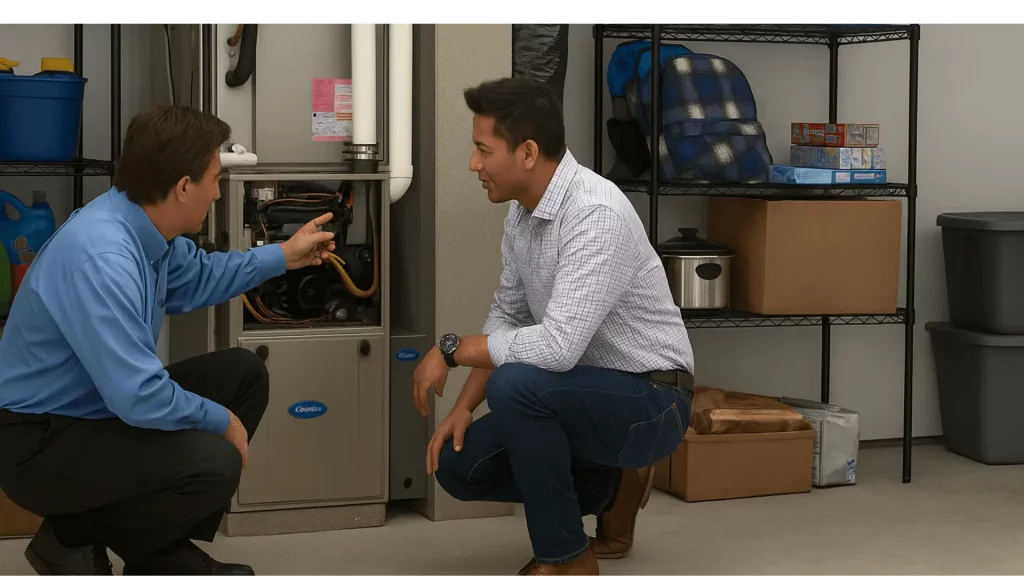
When temperatures drop, your furnace should deliver warm air throughout your home. But if you notice your furnace blowing cold air, the problem can quickly become uncomfortable. The cause may be something simple, such as an incorrect thermostat setting or a dirty filter, or it could indicate an ignition, airflow, electrical, or safety-control issue.
If your furnace is blowing cool air, don’t assume you need a new heating system. Understanding what happens before you call for service can help you identify simple problems and know when professional help is necessary.
This guide explains why is my furnace blowing cold air, what you can safely check yourself, and when to contact a professional.
Why is My Furnace Blowing Cold Air?
There are several possible reasons for a furnace blowing cold air instead of warm air. Common causes include:
- Incorrect thermostat settings
- A dirty or clogged air filter
- Normal furnace startup operation
- Ignition or igniter problems
- A dirty or faulty flame sensor
- Restricted airflow
- Gas supply problems
- Electrical or control issues
- A malfunctioning blower motor
- Furnace overheating and activating a safety control
The timing of the problem can also provide useful clues. For example, a furnace that briefly blows cool air during startup may be operating normally, while one that continuously blows cold air may need professional diagnosis.
1. Check Your Thermostat Settings
Before troubleshooting the furnace itself, check out the thermostat.
Make sure:
- The thermostat is set to Heat
- The temperature is set higher than the current room temperature
- The fan is set to Auto, rather than On
- The thermostat has power
- The thermostat is displaying normally
If the fan is set to On, the blower may continue circulating air even when the furnace is not actively heating. This can make it seem like the furnace is blowing cold air.
If the thermostat appears to be working but your heating system does not respond correctly, see our guide on why your thermostat is not turning on the heat.
2. Check the Furnace Air Filter
A dirty filter is another common reason for a furnace blowing cold air.
The filter captures dust and other particles before air moves through the furnace. When it becomes heavily clogged, airflow can become restricted. This may cause the furnace to overheat and shut down its heating operation while the blower continues to circulate air.
The result can be furnace blowing cold air only or inconsistent heating.
Check the filter and replace it if it is visibly dirty or restricted. If you are unsure about furnace filter maintenance, Gunny’s furnace maintenance checklist provides additional guidance.
3. Your Furnace May Be in Its Normal Startup Cycle
Not every instance of furnace blowing cold air means something is wrong.
Some furnaces may circulate air briefly during startup before the system begins delivering warm air. You may initially feel room temperature or slightly cool air from the vents.
This should normally change to warm air once the heating cycle is established.
If the air remains cold for an extended period or your home never reaches the thermostat setting, the system may have an underlying problem.
4. The Ignition System May Be Failing
Gas furnaces need a functioning ignition system to produce heat.
If the igniter fails, the burners may not ignite properly. The blower can still operate, causing the furnace to blow cold air instead of heat.
Ignition problems can also cause the furnace to start and then shut down shortly afterward.
Because ignition components involve gas and electrical systems, they should generally be inspected by a qualified HVAC professional rather than repaired as a DIY project.
For more information about this component, see Gunny’s guide to furnace ignitor replacement.
5. A Dirty or Faulty Flame Sensor Can Shut Off the Burners
Gas furnaces use a flame sensor to confirm that the burners have successfully ignited.
If the sensor becomes dirty or develops a fault, the furnace may shut the burners off as a safety measure. The blower can continue running even though the furnace is no longer producing heat.
This can result in furnace blowing cold air when the heat is on.
If you suspect a flame sensor or another internal furnace component, professional diagnosis is recommended rather than repeatedly resetting the system.
6. Restricted Airflow Can Cause the Furnace to Overheat
Your furnace needs adequate airflow to operate properly.
A clogged filter is one possible source of restricted airflow, but blocked return vents, closed registers, duct problems, or blower issues can also affect air movement.
When airflow becomes too restricted, the furnace can become excessively hot. A safety control may then shut down the heating portion of the system.
The blower may continue operating, leaving you with furnace blowing cold air no heat.
Check that furniture, rugs, boxes, or other objects are not blocking supply registers or return vents.
7. Check the Gas Supply on a Gas Furnace
If you have a gas furnace, the system needs an appropriate gas supply to generate heat.
A gas supply interruption or another gas-related issue can result in a gas furnace blowing cold air.
Gas-related furnace problems should not be treated as DIY repairs. If you smell gas inside your home, leave the area and contact the appropriate emergency service. Do not attempt to diagnose or repair a gas line yourself.
8. Electrical or Control Problems May Be Preventing Heating
Modern furnaces rely on electrical components, control boards, safety switches, wiring, and sensors to coordinate heating operation.
A problem with one of these components can cause the blower to operate without producing warm air.
If your furnace keeps blowing cold air even after checking the thermostat and filter, avoid repeatedly resetting the system. A professional inspection can determine whether the problem is electrical, mechanical, or related to a furnace safety control.
9. Your Furnace Could Be Short Cycling
Short cycling occurs when a furnace repeatedly starts and stops without completing a normal heating cycle.
Restricted airflow, thermostat problems, equipment issues, safety controls, and other conditions can contribute to short cycling.
A furnace that repeatedly shuts down may eventually leave your home feeling cold even though the system appears to be running.
If you notice your furnace starting and stopping frequently, Gunny’s guide on why your furnace keeps turning off explains several possible causes.
Why is My Furnace Blowing Cold Air at Night?
If you notice furnace blowing cold air at night, the underlying cause may be the same problem that occurs during the day.
However, the issue may become more noticeable at night because outdoor temperatures are lower, and the furnace may run for longer periods.
Possible causes include:
- A restricted air filter
- Thermostat problems
- Ignition issues
- Airflow restrictions
- Short cycling
- Furnace component failure
If your furnace works normally during the day but repeatedly stops heating at night, make note of when the problem occurs and how long the furnace runs before the air becomes cold. This information can help a technician diagnose the problem.
What to Do When Your Furnace is Blowing Cold Air?
If you have a furnace blowing cold air, start with the basic checks that are safe for homeowners.
Step 1: Check the thermostat
Confirm that it is set to Heat and that the temperature is higher than the current indoor temperature.
Step 2: Check the fan setting
Set the fan to Auto rather than on.
Step 3: Check the air filter
Replace a dirty or heavily restricted filter with the correct replacement.
Step 4: Check your vents
Make sure supply registers and return vents are not blocked.
Step 5: Observe the furnace
Notice whether the furnace starts normally, shuts down shortly afterward, or continues running without producing warm air.
Step 6: Know when to stop troubleshooting
Do not attempt to repair gas lines, electrical wiring, ignition components, burners, control boards, or other internal furnace components.
If the basic checks do not solve the problem, professional furnace services are the appropriate next step.
Can You Fix a Furnace Blowing Cold Air Yourself?
Some basic checks are reasonable for homeowners.
You can generally:
- Adjust thermostat settings
- Replace a dirty air filter
- Set the fan to Auto
- Make sure vents are unobstructed
- Check whether the furnace has power
However, internal furnace repairs are different.
Avoid attempting to repair:
- Gas connections
- Burners
- Ignition systems
- Electrical wiring
- Control boards
- Flame sensors
- Safety switches
If the problem continues, have the system professionally diagnosed.
When Should You Call for Furnace Repair?
You should arrange professional service if your furnace blowing cold air problem continues after the basic checks.
Professional help is especially important if:
- The furnace does not produce warm air
- The furnace repeatedly starts and stops
- The burners will not stay lit
- The system makes unusual noises
- The thermostat works but the furnace does not respond
- The furnace repeatedly trips a breaker
- Your home cannot reach the desired temperature
- You smell gas
- The furnace shuts down unexpectedly
Gunny’s provides furnace services including furnace repair, maintenance, and inspections.
For broader heating problems, you can also explore Gunny’s heating services.
How to Prevent Your Furnace from Blowing Cold Air?
Regular maintenance can help identify developing problems before they become major heating failures.
Homeowners should:
- Replace furnace filters regularly
- Keep supply and return vents clear
- Check thermostat operation before the heating season
- Pay attention to unusual noises
- Address repeated short cycling
- Schedule professional heating maintenance
- Have developing furnace problems inspected early
Regular professional maintenance can also help identify problems with airflow, ignition, safety controls, electrical connections, and other furnace components before they become larger issues.
Final Thoughts
A furnace blowing cold air does not automatically mean you need a new furnace.
The cause could be something simple, such as an incorrect thermostat setting or dirty filter. It could also be related to ignition, airflow, flame sensing, electrical components, or another internal furnace problem.
Start with the basic checks you can safely perform. If your furnace is blowing cool air throughout the heating cycle or continues to malfunction after those checks, professional diagnosis is the safest next step.