Air conditioning systems play a critical role in maintaining indoor comfort, especially during periods of high outdoor temperatures. Like any mechanical equipment, an air conditioner requires regular maintenance to operate efficiently and reliably over time.
One of the most common questions homeowners ask is how often they should schedule professional AC service. In most cases, a residential air conditioning system should be serviced once each year. This annual maintenance helps improve energy efficiency, reduce the risk of unexpected breakdowns, and extend the life of the equipment.
However, the ideal service schedule can vary depending on the age of the system, how frequently it operates, and the conditions inside the home. This guide explains the recommended maintenance frequency, factors that influence service needs, and the benefits of routine AC maintenance.
How Often Should You Get Your AC Serviced?
For most homes, professional air conditioner maintenance should be scheduled at least once every 12 months.
The best time to arrange this service is in the spring, before the cooling season begins. Pre-season maintenance allows an HVAC technician to inspect the system, clean essential components, and address any developing issues before the unit is placed under heavy demand.
In certain situations, servicing the system every six months is advisable. This is particularly beneficial for older units, homes with pets, or systems that operate extensively in hot climates.
Recommended AC Service Frequency
| System Type or Condition | Recommended Service Interval |
|---|---|
| Standard residential air conditioner | Once per year |
| Systems more than 10 years old | Every 6 to 12 months |
| Homes with pets or elevated dust levels | Every 6 months |
| Systems operating heavily in hot climates | Every 6 months |
| Commercial HVAC systems | 2 to 4 times per year |
Factors That Affect How Often Your AC Needs Service
While annual maintenance is sufficient for many systems, several factors may increase the need for more frequent servicing.
- Age of the Equipment: As an air conditioner ages, normal wear and tear can reduce efficiency and increase the likelihood of component failure. Systems older than 10 years often benefit from semi-annual maintenance.
- System Usage: Air conditioners that run for long periods each day experience greater mechanical stress. In regions with prolonged hot weather, more frequent maintenance can help maintain dependable performance.
- Indoor Conditions: Homes with pets, excessive dust, ongoing renovations, or high indoor humidity can cause filters and coils to become dirty more quickly, reducing airflow and system efficiency.
- Repair History: If the system has experienced recurring issues, regular inspections can help identify and correct minor problems before they result in major repairs.
- Warranty Requirements: Many manufacturers require proof of routine maintenance to keep warranty coverage in force. Annual service records may be necessary when submitting warranty claims.
Signs Your AC Needs Service Sooner
Even with a routine maintenance schedule, certain symptoms indicate that the system should be inspected before the next planned service.
Contact a qualified HVAC technician if you notice:
- Weak airflow from supply vents
- Warm air coming from the system
- Unusual noises such as buzzing, grinding, or rattling
- Musty or burning odors
- Water leaking around the indoor unit
- Frequent cycling on and off
- Higher-than-normal energy bills
- Uneven temperatures throughout the home
Prompt attention to these issues can prevent more extensive and costly repairs.
What Is Included in a Professional AC Service
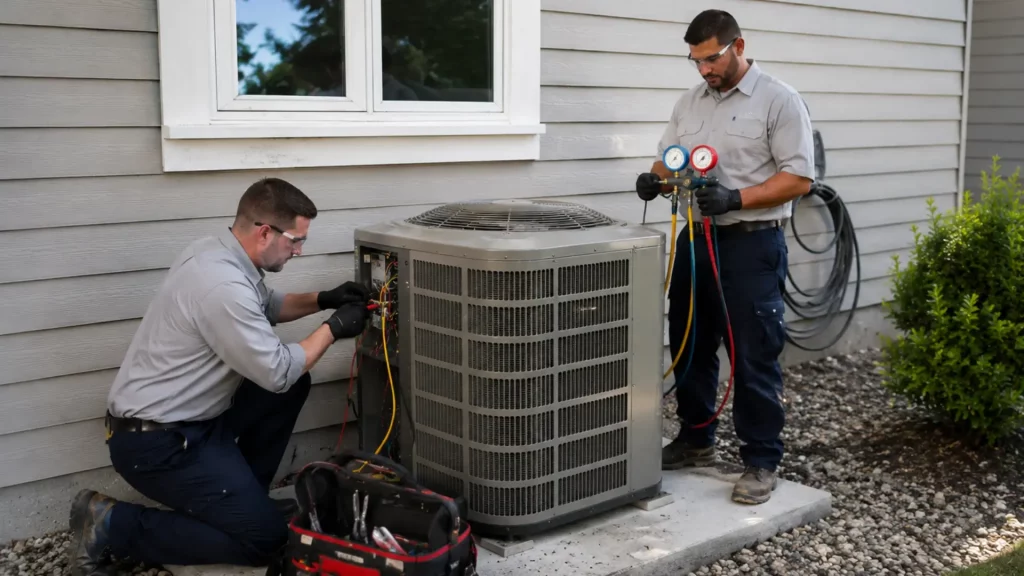
A professional maintenance visit involves a detailed inspection, cleaning, and performance evaluation of the air conditioning system.
Typical service tasks include:
- Cleaning condenser and evaporator coils
- Checking refrigerant pressure and levels
- Inspecting electrical connections and controls
- Testing thermostat operation and calibration
- Cleaning or replacing air filters as needed
- Flushing the condensate drain line
- Lubricating moving components where applicable
- Measuring airflow and temperature differential
- Inspecting blower components
- Verifying safe system operation
The specific procedures may vary depending on the type and condition of the equipment. Check our another blog for more information, AC Maintenance Checklist.
Benefits of Regular AC Maintenance
Routine maintenance provides several important advantages for homeowners.
- Improved Energy Efficiency: A clean and properly adjusted system requires less energy to cool the home, which can reduce utility costs.
- Reduced Risk of Breakdowns: Regular inspections help identify worn components before they fail during peak usage.
- Longer Equipment Life: Preventive maintenance reduces unnecessary strain on critical parts and can extend the lifespan of the system.
- Better Indoor Air Quality: Cleaning filters and internal components helps reduce dust, allergens, and microbial growth.
- More Consistent Comfort: Well-maintained systems provide stronger airflow and more uniform cooling throughout the home.
- Protection of Warranty Coverage: Documented maintenance can support manufacturer warranty claims and help preserve coverage.
Recommended AC Service Schedule for Different Situations
The appropriate maintenance schedule depends on how the system is used and the conditions in which it operates.
Once Per Year
Annual maintenance is generally sufficient for:
- Newer systems
- Average household usage
- Homes with relatively clean indoor environments
Twice Per Year
Semi-annual maintenance is recommended for:
- Systems older than 10 years
- Homes with pets
- Dust-prone environments
- Heavy cooling demands
- Households with allergy concerns
Quarterly Maintenance
More frequent service is typically appropriate for:
- Commercial buildings
- Facilities with continuous HVAC operation
- Specialized equipment requiring close monitoring
Frequently Asked Questions
Can I Maintain My AC Myself?
Homeowners can perform basic maintenance tasks such as replacing air filters and keeping the outdoor unit free of leaves and debris. Professional service is still necessary to inspect refrigerant, electrical components, and internal mechanical systems.
What Happens If I Skip Annual Maintenance?
Neglecting maintenance can lead to lower efficiency, higher energy costs, poor cooling performance, and an increased likelihood of major repairs.
Is AC Maintenance Worth the Cost?
Yes. Preventive maintenance is generally far less expensive than emergency repairs or premature equipment replacement.
When Should I Schedule AC Service?
Spring is the most effective time to service an air conditioner because it prepares the system for the highest cooling demands of the year.
Conclusion
Most residential air conditioning systems should be professionally serviced once each year. This annual maintenance is one of the most effective ways to keep the system operating efficiently, reliably, and safely.
If the equipment is older, used heavily, or installed in a home with pets or high dust levels, servicing every six months may be more appropriate.
By following a consistent maintenance schedule, homeowners can reduce energy costs, minimize repair expenses, improve indoor air quality, and extend the life of their air conditioning system.