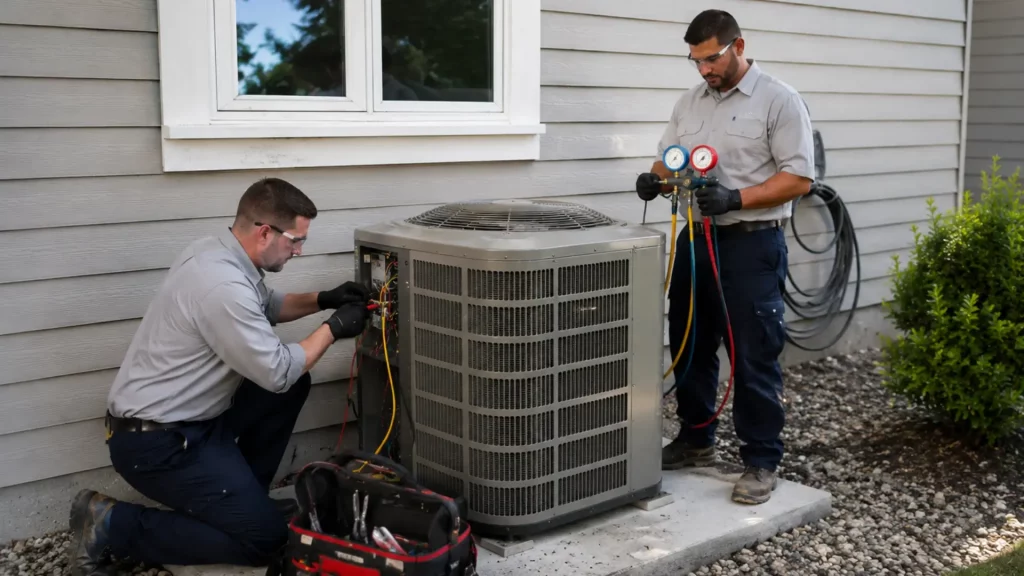
You paid for an AC repair, the technician replaced a faulty component, and the system started cooling again. Problem solved, right?
Not always.
A few days or weeks later, you notice the same frustrating behavior. The air conditioner turns on, runs for a short time, shuts off, and then starts again before long. The house may feel cool at times, but the system never seems to settle into a normal rhythm.
This problem, known as short cycling, is more common than many homeowners realize. What’s even more confusing is that it can continue even after a repair has been completed. The reason is simple: short cycling is often a symptom, not the root problem. While a repair may fix a failed part, it doesn’t always address the conditions that caused the system to behave abnormally in the first place. Understanding why short cycling continues after repairs can help homeowners avoid repeated service calls, higher energy bills, and unnecessary equipment wear.
What Does Short Cycling Mean?
Under normal conditions, an air conditioner runs long enough to remove heat from the home and reach the thermostat’s target temperature. Once that temperature is reached, the system shuts off and remains off until cooling is needed again.
Short cycling occurs when that process is interrupted.
Instead of completing a normal cooling cycle, the air conditioner repeatedly starts and stops within a short period. The system may run for only a few minutes before shutting down, then restart again soon afterward.
At first glance, this may not seem like a major issue. After all, the system is still producing cool air. The problem is that air conditioners are designed to operate in longer, consistent cycles. Frequent starts and stops reduce efficiency and place additional strain on critical components.
If you want to understand how proper system operation should work, it helps to explore this detailed air conditioning overview, which explains how cooling systems are designed to function in normal conditions.
Why Repairs Sometimes Fix the Symptom Instead of the Cause
One of the biggest misconceptions about HVAC repairs is that replacing a failed component automatically resolves the entire issue.
Imagine a technician replaces a faulty capacitor, contactor, or sensor. That repair may restore normal operation temporarily because the damaged part was preventing the system from functioning correctly.
However, if another condition is causing the air conditioner to short cycle, the problem may return shortly after the repair.
This is why experienced HVAC professionals look beyond the failed component and evaluate how the entire system is performing. Short cycling often involves factors that are not immediately obvious during a basic repair visit.
In many cases, a proper air conditioning repair service includes deeper system diagnostics rather than just replacing visible failed parts.
Sometimes the Air Conditioner Isn’t Actually the Problem
Many homeowners assume that short cycling always points to a mechanical failure. In reality, some of the most common causes have nothing to do with broken equipment.
An oversized air conditioner is a good example.
Larger equipment is often viewed as better, but cooling systems must be matched carefully to the home’s cooling requirements. When an air conditioner is too large, it can cool the area around the thermostat very quickly. As soon as the thermostat senses the target temperature, the system shuts off. The problem is that other areas of the home may not have cooled sufficiently. As temperatures rise again, the thermostat calls for cooling, and the cycle repeats. The equipment may be operating exactly as designed, yet the homeowner continues experiencing short cycling.
This issue is closely related to improper system selection, which is why understanding oversized AC unit symptoms and correct system planning is important before installation or replacement.
The Hidden Role of Airflow
Airflow problems are responsible for many HVAC issues, including persistent short cycling.
An air conditioner relies on a steady volume of air moving through the system. When that airflow becomes restricted, performance begins to suffer. In some homes, the restriction is obvious, such as a severely clogged air filter. In others, the problem is hidden within the ductwork, return air system, or evaporator coil. Restricted airflow can create temperature imbalances throughout the system. Components may overheat, coils may freeze, and operating conditions may change enough to trigger abnormal cycling patterns.
This is one reason some homeowners continue experiencing short cycling even after replacing parts that initially appeared to be the cause.
Thermostat Placement Can Create False Signals
Thermostats are often overlooked when diagnosing short cycling.
Most people think of the thermostat as a simple temperature control device, but its location has a significant impact on system performance.
For example, a thermostat installed near a supply vent may cool much faster than the rest of the home. A thermostat exposed to direct sunlight may register temperatures that don’t accurately reflect indoor conditions.
In both situations, the thermostat can send signals that cause the air conditioner to shut off or restart at inappropriate times.
Refrigerant Problems Can Return After Repairs
Refrigerant-related issues are another reason short cycling sometimes persists.
If a technician discovers low refrigerant levels, adding refrigerant may improve performance temporarily. However, refrigerant does not simply disappear over time. Low levels typically indicate a leak somewhere within the system.
When the leak remains unresolved, refrigerant levels gradually drop again, and the same symptoms begin to reappear.
This is why long-term performance often depends on proper system evaluation rather than temporary fixes.
If you are noticing broader cooling issues such as weak airflow or uneven temperatures, it may also be helpful to review common AC running but not cooling fixes to understand related system behavior.
Electrical Issues Are Not Always Easy to Find
Modern air conditioning systems rely on a network of electrical components that work together continuously.
A failed capacitor may be replaced during one repair visit, but other electrical problems can remain hidden.
Loose wiring, worn contactors, failing relays, or control board issues can all interfere with normal operation. Some of these problems occur only under specific conditions, making them difficult to detect during a routine inspection.
For homeowners trying to recognize early warning signs, understanding signs an AC needs repair can help prevent recurring system issues before they become worse.
How Changes to the Home Can Affect Cooling Performance
Not every short cycling issue originates within the HVAC system itself.
Homes change over time, and those changes can affect how a cooling system operates.
Consider a few common examples:
- A room addition increases the home’s cooling demand.
- New insulation changes heat transfer patterns.
- Window replacements alter solar heat gain.
- Interior renovations affect airflow throughout the house.
An air conditioner that performed well years ago may struggle under different conditions today.
When system performance changes, homeowners often benefit from reviewing proper system design concepts such as this AC sizing guide, which explains how load calculations affect performance.
Why Short Cycling Gets More Expensive Over Time
One reason short cycling deserves prompt attention is the amount of stress it places on the system.
Starting an air conditioner requires significantly more energy than maintaining operation during a normal cooling cycle. When this process repeats throughout the day, wear and tear accumulates much faster.
Over time, short cycling can contribute to:
- Higher energy consumption
- Increased utility bills
- Reduced indoor comfort
- More frequent breakdowns
- Premature compressor failure
- Shorter equipment lifespan
Regular air conditioning maintenance can help identify early airflow, refrigerant, or electrical issues that may lead to short cycling.
What a Complete Short Cycling Diagnosis Should Include
When short cycling continues after repairs, solving the problem requires a broader evaluation.
Rather than focusing on a single component, HVAC professionals should assess the entire system, including equipment operation, airflow performance, thermostat behavior, refrigerant levels, electrical controls, and overall system sizing.
This approach helps identify whether the problem stems from the equipment itself, the duct system, the home’s layout, or another factor affecting performance.
The goal is not simply to stop the air conditioner from cycling. The goal is to understand why it is cycling in the first place.
Final Thoughts
When an air conditioner continues short cycling after repairs, it often indicates that the original repair addressed only part of the problem.
While failed components can certainly trigger short cycling, they are not the only cause. Airflow restrictions, thermostat issues, refrigerant leaks, oversized equipment, electrical faults, and even changes to the home can all contribute to the same symptom.
That’s why persistent short cycling should never be viewed as a simple equipment problem.
A thorough diagnosis that examines the entire cooling system is often the key to finding a lasting solution. Once the root cause is identified, homeowners can improve comfort, reduce operating costs, and help extend the life of their HVAC equipment.
Frequently Asked Questions
1. Why does my AC short cycle even though it was recently repaired?
A repair may fix a failed component without addressing the underlying cause of the short cycling. Airflow restrictions, thermostat placement issues, refrigerant leaks, improper system sizing, and electrical problems can all continue causing short cycling after a repair has been completed.
2. Can a thermostat cause an air conditioner to short cycle?
Yes. If a thermostat is malfunctioning or installed in a location that does not accurately reflect the home’s temperature, it may signal the air conditioner to shut off and restart too frequently. This can create short cycling even when the HVAC equipment itself is working properly.
3. How long should a normal AC cooling cycle last?
Most residential air conditioners run for approximately 15 to 20 minutes per cycle under typical conditions, although factors such as outdoor temperatures, system size, and home insulation can affect cycle length.
4. Is short cycling a sign that my air conditioner is too large?
It can be. An oversized air conditioner may cool the thermostat area too quickly, causing the system to shut off before the rest of the home reaches the desired temperature. This often results in repeated starts and stops throughout the day.
5. Can short cycling damage an AC compressor?
Yes. Frequent starting and stopping places additional stress on the compressor, which is one of the most expensive components in an HVAC system. If left unresolved, short cycling can contribute to premature compressor wear and potentially shorten the lifespan of the entire system.