If your air conditioner is making loud noise, you’re not alone. Many homeowners notice new sounds from their AC units, especially during the hottest months when systems are working overtime. While some sounds are harmless, others could be early warnings of a serious problem.
Ignoring them might lead to higher repair bills or complete system failure. This guide will walk you through the most common AC noises, what they mean, what you can do on your own, and when to call in a professional. Before jumping to conclusions, it’s helpful to first troubleshoot your AC before calling a technician to rule out simple issues.
AC Making Loud Noise? What Each Type of AC Noise Could Mean
Air conditioners aren’t silent, but they also shouldn’t sound like a construction site. Here’s a breakdown of common AC noises and what they often indicate:
Banging or Clanking
These sounds usually point to a loose or broken part inside the compressor or the blower. A bent fan blade hitting the unit can also cause this noise. Banging should always be investigated quickly since it can lead to significant internal damage. If you notice your AC making loud noise that sounds like banging or metal hitting metal, the system should be checked promptly. These types of noises are often early signs your AC needs repair and should never be ignored.
Buzzing or Vibrating
Buzzing can mean several things: electrical problems, a loose component vibrating against the frame, or even a dirty condenser coil.An AC making noise continuously may also have a failing motor, contactor, or other electrical component. It might also suggest a malfunctioning contactor or failing motor. If the buzzing is constant, it’s best to turn off the unit and call for inspection. In some cases, buzzing noises are linked to electrical problems like an AC unit tripping the breaker.
Hissing
A hissing sound, especially from the indoor unit, may suggest a refrigerant leak. If your air conditioner is making weird noise in the form of persistent hissing, professional inspection is recommended. This is not only damaging to the system but can also reduce cooling performance. It could also be from a high-pressure buildup or internal valve leak.
Clicking
It’s normal to hear clicking when the unit turns on or off. But if the clicking is constant or irregular, it might indicate a problem with the thermostat, capacitor, or control board. This can prevent the unit from starting properly.
Rattling or Thumping
These sounds often mean that something has come loose inside the unit like a fan blade, panel, or screw.A loose component can be a common reason for an AC unit making loud noise. Debris in the outdoor unit can also cause rattling. Thumping that occurs when the system starts up might indicate an issue with the blower assembly or motor mounts.
Popping or Cracking
These noises usually come from the ductwork, especially when your system starts or stops. It’s caused by the metal expanding or contracting due to temperature changes. While not typically dangerous, severe popping could signal undersized ducts or insulation issues.
Whirring or Grinding
If you hear a mechanical whirring or grinding, this often points to problems with the fan motor or compressor.When an air conditioning unit is making loud noise along with grinding or whirring, these components should be inspected. These components are essential to the operation of your AC, and if they fail, the entire system could shut down.
Motor-Like Humming
A gentle hum can be normal, but if the hum becomes loud or constant, it could be a sign of electrical issues, capacitor problems, or failing motor bearings. If accompanied by poor cooling, it’s likely a mechanical failure in progress.
AC Noises That Should Never Be Ignored
Some sounds aren’t just annoying they’re dangerous. These include:
- Loud banging or metal-on-metal screeching: Suggests failing compressor or blower components.
- Persistent hissing: May indicate a refrigerant leak, which could harm your system and reduce efficiency.
- Buzzing from the electrical panel or AC contactor: Could be an electrical hazard.
If you hear any of these, turn off your system and schedule a professional inspection.
How to Troubleshoot Minor AC Noises at Home Safely ?
Some noises have simple fixes that you can address yourself. f your AC is making a loud noise, start with these basic checks before calling a technician.Here are a few things you can do:
- Clean the outdoor unit: Leaves, sticks, and other debris can rattle around in the condenser fan. This can sometimes cause an air conditioning unit to make loud noise from the outdoor condenser. Turn off power to the unit, remove the top cover, and clear out any debris.
- Tighten loose screws or panels: Vibrations can cause mounting screws to loosen. With the unit powered off, carefully check and tighten visible screws.
- Change the air filter: A clogged filter can restrict airflow, making your system work harder and sometimes produce unusual sounds. Replace the filter every 1-2 months during heavy use.
- Reset the system: Sometimes, a simple reset can fix electrical clicking or humming. Turn the thermostat off, wait a few minutes, then power the system back on.
- Check for blocked vents: Ensure all air vents are open and unobstructed. Closed vents can cause pressure issues that lead to noise.
When to Call a Licensed AC Service Technician for Loud AC Noise?
Not every problem can or should be fixed on your own. Professional help is necessary when:
- The noise is electrical in nature (buzzing, sparking sounds)
- There’s a refrigerant smell or visible leak
- The unit fails to start or stops abruptly
- The noise persists even after basic cleaning or filter changes
- You hear high-pitched or grinding noises
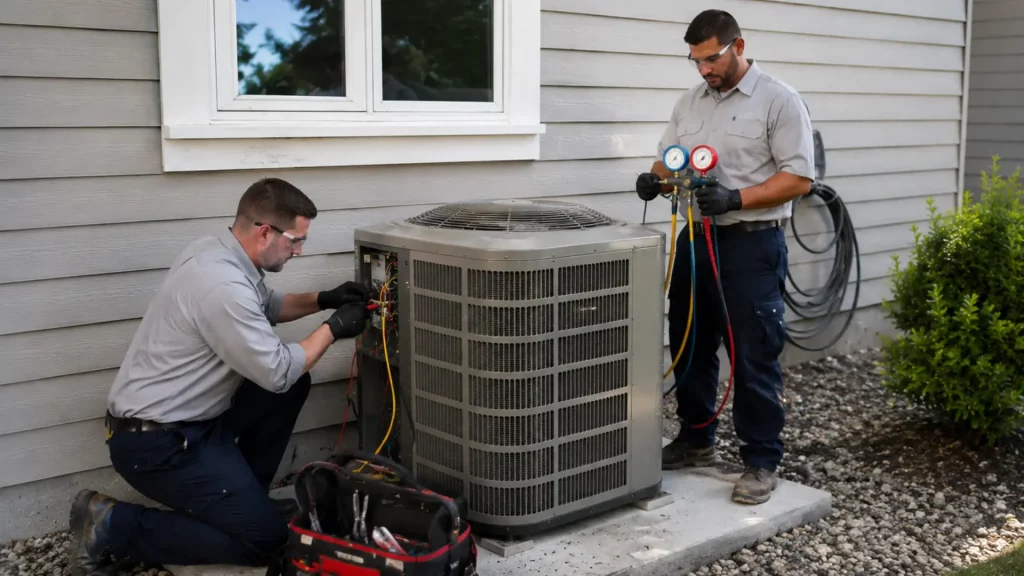
Licensed ac services technicians have the tools and training to diagnose internal failures, check refrigerant pressure, and test electrical components safely. If your AC is making loud noise and the problem continues after basic troubleshooting, professional diagnosis can help identify the underlying issue. Delaying professional repair can turn a small fix into a full system replacement.
AC Making Loud Noise but Not Cooling? Here’s Why
This is one of the most common complaints. If your air conditioner is making loud noise but blowing warm air or no air at all, here are some likely causes:
- Low refrigerant levels: Often linked to hissing or bubbling noises. Low refrigerant leads to poor cooling and can damage the compressor over time.
- Dirty coils: If your evaporator or condenser coils are coated with dirt or dust, the system struggles to transfer heat. This forces the compressor to work harder and may create humming or buzzing noises.
- Blocked or broken fans: If the fan blades are obstructed or the motor fails, the system can’t circulate air properly. This might come with rattling, whirring, or screeching sounds.
- Compressor issues: If the compressor is failing, you’ll hear loud buzzing, clicking, or humming. An AC unit making loud noise from the compressor can also experience inconsistent or completely absent cooling.
- Electrical faults: Problems in the control board or capacitor can stop the system from working entirely while still producing noises.
If your system is noisy but failing to cool properly, this often overlaps with issues explained in our guide on AC running but not cooling.
Loud Noise When Your AC Starts or Shuts Down
If your AC only makes noises when starting up or shutting down, here are a few reasons:
- Clicking or popping: Ductwork expanding or contracting
- Clunking: Loose motor mounts or blower parts
- Buzzing on startup: Weak capacitor or hard-starting compressor
- Rattling during shutdown: Fan slowing down improperly due to imbalance or wear
- These startup or shutdown noises may also appear if your AC is not working properly after a power outage.
While occasional sounds during startup are normal, repeated or loud noises may indicate wear and should be looked at.
Read More: How to Tell If Your Air Conditioner Needs Repair
Preventing Future AC Noises: Smart Maintenance Tips
Preventing strange noises is often about regular upkeep. Here’s how to keep your system running quietly:
- Schedule bi-annual tune-ups: Have a professional inspect your AC before and after peak seasons.
- Replace air filters regularly: Dirty filters stress the system and can lead to airflow problems and noise.
- Keep the outdoor unit clean: Clear leaves, weeds, and debris monthly.
- Ensure proper insulation in ducts: Loose or rattling ducts can be a major noise source.
- Keep furniture and objects away from indoor vents: Obstructions can change air pressure and lead to unusual sounds.
Following a regular seasonal HVAC maintenance checklist can significantly reduce unexpected AC noises and help prevent air conditioners from making loud noise problems.
Final Thoughts
If your air conditioner starts making a loud noises, it’s trying to tell you something. Whether it’s a loose part, a failing motor, or a refrigerant leak, catching the issue early can save you hundreds in repairs and prevent uncomfortable breakdowns.
Some noise issues are easy to fix at home. But when in doubt, always reach out to a certified HVAC professional. Your comfort, safety, and energy bills depend on a well-maintained, quiet, and efficient system.
By staying alert to changes in your AC’s behavior and sticking to a regular maintenance schedule, you can avoid most surprising repairs and extend the life of your system. Listen closely your AC might be telling you something important. If the noise turns out to be more than a minor fix, understanding AC repair costs can help you plan the next steps confidently.